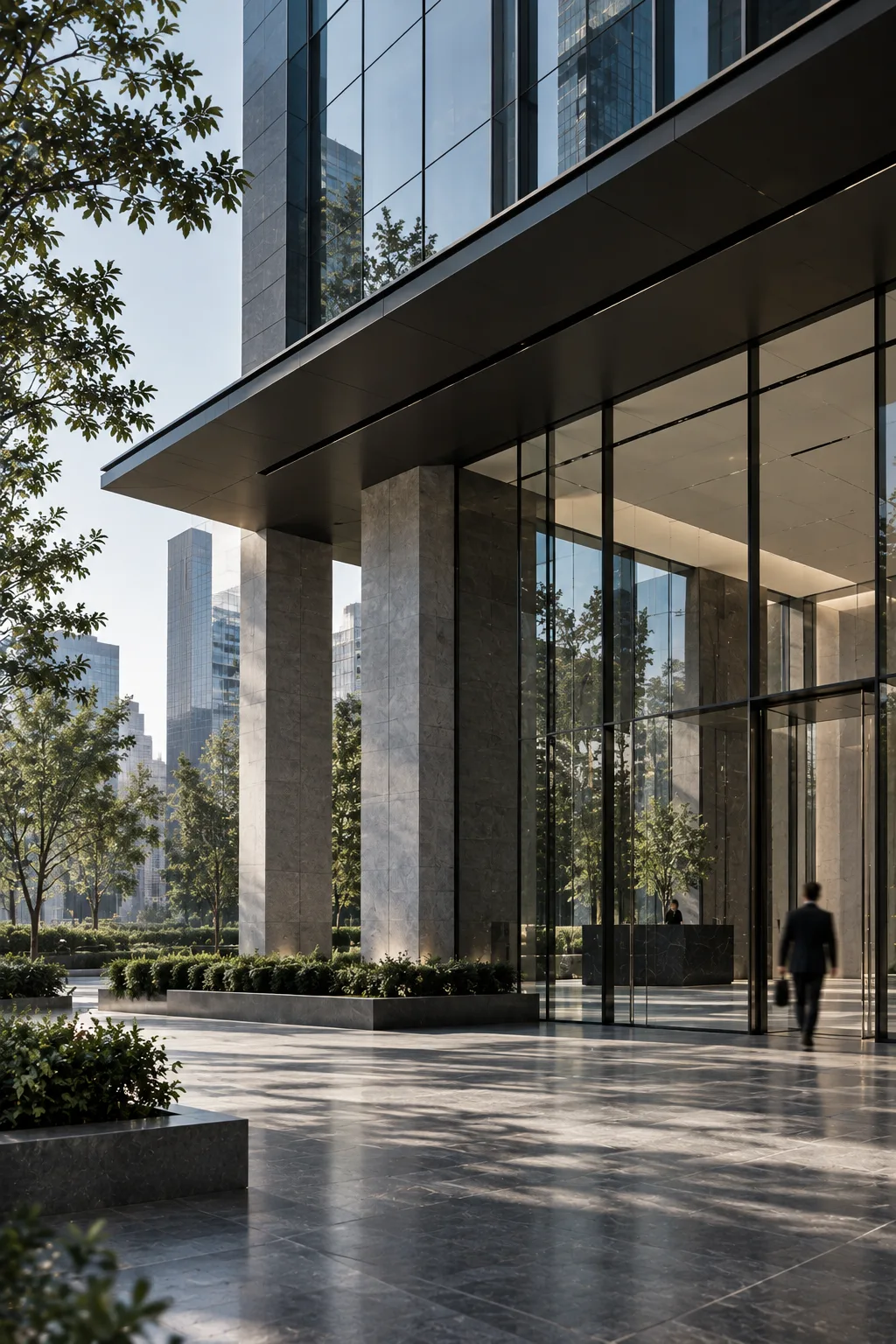
Single-tenant buildings in São Paulo, for when the operation needs the whole property.
A single-tenant building (in Portuguese, prédio monousuário) is a building occupied by one company only, with no shared access, common areas or façade. Wharbz finds, compares and negotiates single-tenant buildings in São Paulo for companies that need full control over the property.
When a whole building makes sense
For operations that need to decide on the entire property: who comes in, how the spaces are organized and what the façade says about the company.
- The company's departments need to work together, without depending on scattered floors.
- Access, security and hours call for rules of their own.
- The headquarters needs to show the brand on the façade and at reception.
- The operation has requirements a shared building cannot accommodate, such as a laboratory, a studio, walk-in customers or loading and unloading.
When the company wants a corporate setting without running a building, the answer is usually a corporate office floor. Our guide Corporate office floor or single-tenant building compares the two side by side.
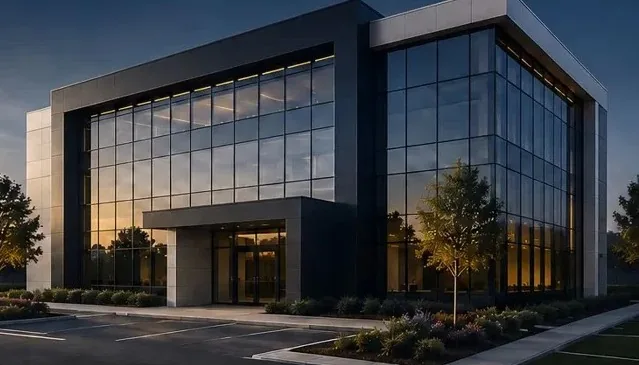
What to assess in a building
In a whole building, what would belong to a shared building's management becomes the company's: every building system goes into the equation.
| Point | What to check |
|---|---|
| Floor plan and circulation | Size and shape of the floors, elevators, stairs and how the areas connect: they define how the operation spreads across the building. |
| Façade and reception | Visibility, street access and the first impression on arrival. Façade signage must follow São Paulo's Clean City Law (Lei Cidade Limpa). |
| Infrastructure | Available power, backup generator, air conditioning, elevators and fiber carriers, and the condition of each system. |
| Condition | Façade, roof, waterproofing and building systems: what needs work before moving in and what will need maintenance. |
| Compliance | Occupancy certificate (Habite-se), a valid Fire Department inspection certificate (AVCB) and zoning that allows the company's activity. |
| Parking and access | Parking, vehicle entrance, loading and unloading, and public transport nearby. |
The cost of running a whole building
In a single-tenant building, there are no shared building charges to split. The company takes on what a shared building's management would handle: maintenance, security, reception, cleaning and insurance, plus the IPTU property tax when the lease passes it on to the tenant.
That is why comparing two buildings, or a building and an office floor, has to be done on total occupancy cost over the whole lease. Wharbz puts the options side by side on that basis.
- Rent
- IPTU property tax, when passed on
- Building maintenance
- Security and reception
- Cleaning
- Insurance, as the lease provides
- Adaptation works
- Negotiated rent-free period, over the lease
- Total occupancy cost
Built-to-suit: a property made for the operation
In a built-to-suit lease, the owner buys, builds or refurbishes the property to the company's specification, and the company then leases it for a fixed term. It usually makes sense when no available property meets the operation's needs and the company plans to stay at the same address for many years.
-
The company specifies
What the operation needs: area, layout, infrastructure and timing.
-
The owner delivers
Buys, builds or refurbishes the property, directly or through third parties.
-
The lease begins
A fixed-term lease, with rules of its own under the law.
Brazilian law gives this lease its own rules: the negotiated terms prevail, the parties may waive rent review during the term, and the penalty for leaving early can be as high as the sum of the remaining rents (Tenancy Law 8,245, art. 54-A).
The built-to-suit work is carried out by the owner. Wharbz works with this model: we introduce owners who offer it, for buildings and for some office floors as well, and follow the negotiation through.
How Wharbz runs the process
-
Understand the operation
Departments, flows, security, growth, timing, budget and what the headquarters needs to say about the company.
-
Shortlist and compare
Ready buildings and, when it makes sense, the built-to-suit alternative, with the total cost of each.
-
Negotiate
Term, rent-free period, adaptation works, improvements, maintenance, rent adjustment and guarantee.
-
Follow through
From signing to moving in, and beyond.
At every stage, material you can take to your board. See what you receive.
What the lease needs you to watch
Improvements and adaptations
Unless the lease says otherwise, necessary improvements are reimbursable, useful ones too if authorized, and purely aesthetic ones are not (Tenancy Law 8,245, arts. 35 and 36). Leases often set a different rule, so it pays to agree on it before the works.
Maintenance
The law makes the owner responsible for defects that predate the lease, and the tenant responsible for damage it causes and for returning the property in the condition received, except for normal wear (arts. 22 and 23). The lease defines the rest.
Insurance
Fire insurance falls on the owner unless the lease says otherwise (art. 22). The lease allocates the other policies.
Term and renewal
Brazilian law lets the tenant ask a court to renew a commercial lease that meets certain requirements, including a written term of five years (art. 51).
Sale of the property
Unless a clause keeping the lease in force is registered on the property's title, a buyer can end the lease with 90 days' notice (art. 8).
Façade signage
Signage follows São Paulo's Clean City Law (municipal Law 14,223/2006), which limits the size and number of signs. It pays to check what the property allows before signing.
Wharbz points out what to check; reviewing the lease is the job of the company's lawyer, and the technical side is for engineers and architects. If the company does not have these professionals yet, we can recommend them, with no obligation.
Where in São Paulo
Single-tenant buildings can be found in several of the city's business districts, from complete office buildings to smaller properties on neighborhood streets. Three questions help choose the area.
- Who needs to get there. The team by metro, clients by car, suppliers with deliveries.
- How the brand wants to be seen. On a high-traffic avenue or on a quiet street.
- What the operation needs from the surroundings. Parking, and the City's rules on truck traffic, such as the Maximum Traffic Restriction Zone (ZMRC).
What companies ask before leasing a whole building
Other property types
- Office spaceFor operations that want a corporate setting in a shared building, with room to grow.
- Street retailFor brands that depend on a storefront, foot traffic and the right customers at the door.
- Setting up in São PauloFor companies coming from another state or another country that need to decide without knowing the city.
Considering a whole building for your operation? The conversation starts with what it needs.
Talk to an advisor