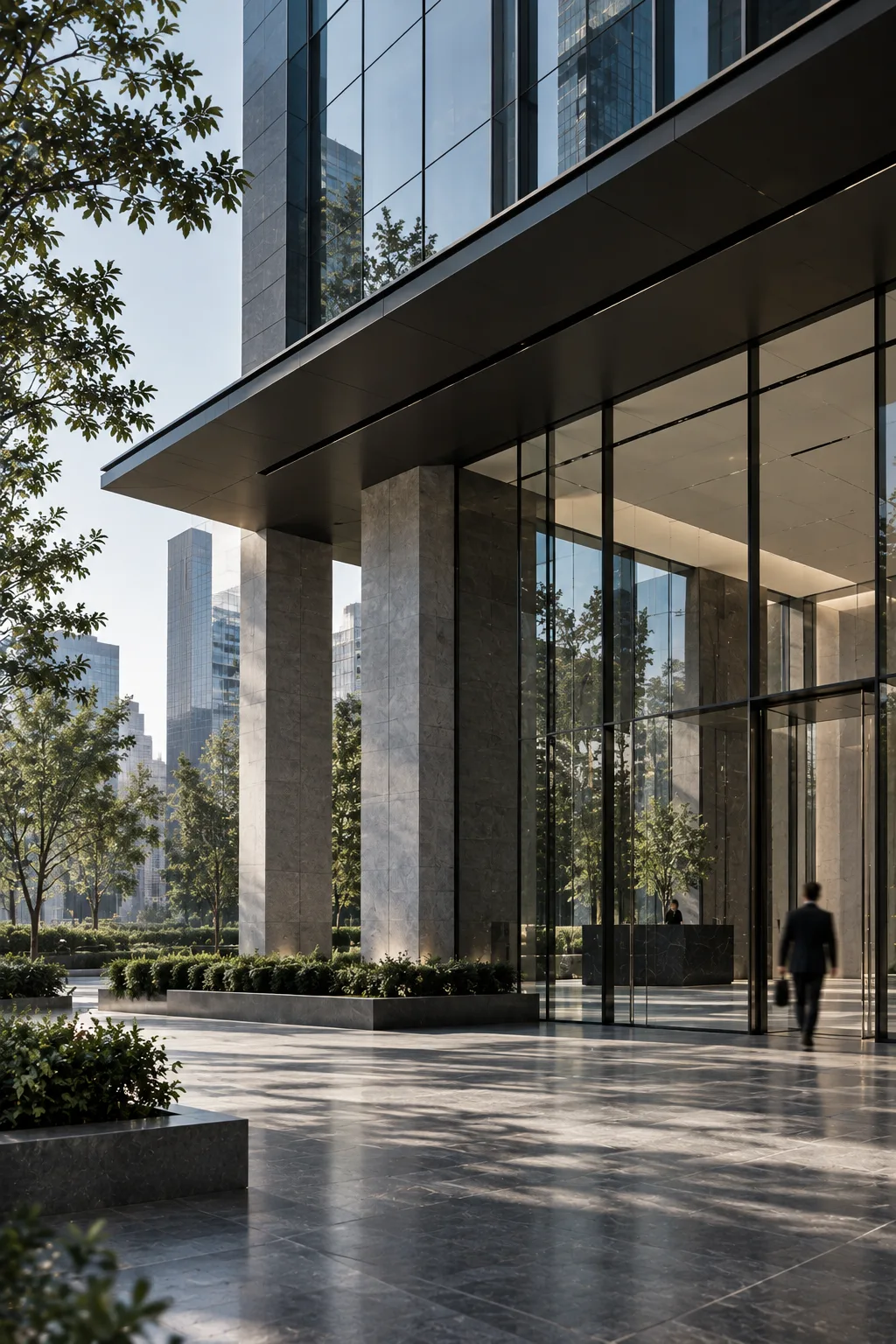
Lighting, noise, privacy, ergonomics and the chance to take a break. All of this affects how people work and how they feel. In this conversation with psychologist Bruna Araújo Geromel, owner of Wharbz Health, we look at why the physical environment is not just the setting for work, and what that changes in the way we think about choosing an office.
Inside the SpaceReading time: 8 minInterviewWharbz Hub
A person can keep delivering, attend meetings and meet deadlines. And still be emotionally exhausted. We spoke with Bruna about what weighs on mental health at work, including a factor that rarely enters this conversation with the importance it deserves. This interview was conducted in Portuguese and translated by Wharbz.
What is the workplace doing to people?
When we talk about mental health at work, the conversation usually turns to leadership, culture and workload. The physical environment rarely comes up. We asked Bruna what really weighs on a professional's emotional experience day to day.
"The environment is not just the setting where work happens. It is part of that experience."
Bruna, psychologist
Constant pressure, lack of autonomy, insufficient recognition. All of this weighs. But Bruna draws attention to something that gets less attention than it deserves: lighting, ventilation, noise, ergonomics, privacy and suitable spaces for concentration, interaction or rest also affect how people experience work.
For her, when a company talks about mental health, it is important to broaden the view. Caring for the individual is not enough. People, relationships, leadership, the organization of work and also the space where all of this happens need to be considered.
The signs appear before sick leave
Companies often only realize there is a problem when someone falls ill, takes sick leave or decides to leave. But Bruna is direct: the signs usually appear earlier.
In the individual: irritability, anxiety, persistent tiredness, difficulty concentrating, discouragement, a constant feeling of overload, loss of motivation. In teams: more conflict, more mistakes, recurring absences, falling engagement, silence in meetings, difficulty asking for help.
"When several of these behaviors start to appear, perhaps the question should not only be 'what is happening to these people?', but also 'what is happening in this work environment?'"
Bruna, psychologist
An important point: emotional distress is not always visible. A person can keep delivering results while already facing significant strain inside. Looking only at productivity may not be enough to understand how that person really is.
Prevention starts before burnout
Is it possible to notice these problems before they turn into exhaustion? And to what extent can leadership, culture and the environment itself act preventively?
For Bruna, prevention starts before sick leave, before burnout and often even before the professional realizes they have reached their limit. This requires the company to develop the ability to observe its own routine and understand which factors are producing or intensifying the strain.
Well-prepared leaders, listening channels, recognition and relationships based on respect and trust work as protective factors. The physical environment is also part of this equation. A space suited to the needs of people and the activities carried out can support concentration, interaction, comfort, recovery and well-being throughout the day.
This does not mean a good office makes up for a poor culture or inadequate leadership. It does not. But it also makes no sense to talk about well-being and ignore the place where people spend a significant part of their day.
The space in practice
What the physical environment really causes
We don't always notice it consciously. But noise, light, temperature and privacy affect concentration, stress and mood before any rationalization.
+ Tap or click each topic to expand
Noise and concentration +
Excessive noise is one of the factors that most interferes with the ability to concentrate and with feelings of stress. Spaces without differentiated zones make both individual focus and recovery between tasks harder.
Lighting and fatigue +
Natural light reduces fatigue and improves mood throughout the day. Inadequate artificial lighting, on the other hand, increases tiredness and contributes to headaches and irritability within a few hours of work.
Privacy and well-being +
The feeling of being constantly watched increases stress and reduces willingness to ask for help or admit mistakes. Spaces with adequate privacy create the conditions for more honest conversations and more comfortable work.
Ergonomics and health +
Physical discomfort is a source of stress that goes unnoticed. Poorly sized furniture, the wrong desk and chair height and a lack of arm support build up tension over the day and affect energy and productivity.
Spaces to pause +
Real breaks, not just switching screens, allow the nervous system to recover and the person to return to their activities with better quality. Environments that offer no space for rest prolong the state of alert and increase accumulated strain.
What makes someone want to be at the office?
At a time when so many companies are debating hybrid work and trying to bring people back to the office, the most honest question may not be "how do we bring people back?", but another one.
"The more interesting question is: what are we offering so that people see value in being there?"
Bruna, psychologist
For Bruna, the office takes on another meaning when it offers experiences that are hard to reproduce at home: being together, exchange, collaboration, access to people, creativity and belonging. The environment itself can make these experiences easier or harder.
A well-planned space takes into account that people don't do the same activity all day. At times they need to talk; at others, to concentrate; at others still, simply to take a break or meet someone from the team. Location also comes into play: ease of access and nearby services can make being present more convenient, or more of a burden.
Choosing an office is a broader decision than it seems
Location, comfort, privacy, spaces for interaction and the chance to take a break influence the way a professional lives their routine. When these choices make sense for the company's reality and for people's needs, the environment can support well-being, belonging and a more positive relationship with work.
This can also be reflected in engagement, satisfaction and retention. The environment alone does not determine these results. Leadership, pay, culture and development opportunities also weigh. But space is one of these factors. And perhaps one that companies are beginning to understand better.
Certifications such as the WELL Building Standard formalize exactly this understanding: they are performance criteria that assess how the physical environment affects the health, comfort and well-being of the people who work in it. WELL-certified buildings consider air quality, lighting, acoustics, ergonomics and recovery spaces as part of the work experience, not as details.
A well-conducted real estate decision should not consider only the cost of occupancy. It should also consider what that space allows the company to build within it.
"How many square meters, and how much does it cost?""How will people work and feel in this space?"
These questions are not mutually exclusive. But the second one changes what you look for when you are searching for an office.
Inside the Space · Wharbz Hub
A series about how the physical environment influences people, culture and companies' decisions.
01Mental health and the office: a conversation with psychologist Bruna
02Architecture and behavior: what the design says about a company's culture
03Truly hybrid: when the office competes with the desk at home
04WELL and other certifications: when well-being becomes a design criterion
05Coming soon · More topics on corporate space
This conversation came about in the context of Setembro Amarelo (Yellow September, Brazil's annual mental health awareness campaign), but the topic has no end date. At Wharbz, the question of how people will work in a space enters the analysis before any other. Because two office floors of the same size can offer completely different experiences to the same company.
Perhaps the right office is not the one that simply accommodates your team. Perhaps it is the one that helps your company work better.
Frequently asked questions
Yes. Factors such as lighting, noise, temperature, ergonomics, privacy and access to spaces to pause directly affect concentration, fatigue, stress and well-being throughout the day. The environment is not the only factor, but it is part of the experience and should not be ignored when talking about mental health at work.
Not on its own. A good space does not make up for poor leadership or an unhealthy organizational culture. But an inadequate environment can intensify existing strain. Thinking about the office strategically is one part of the whole, not the complete solution, but a part that many companies still underestimate.
The WELL Building Standard is an international certification that assesses how the physical environment affects people's health and well-being. It considers air quality, lighting, acoustics, ergonomics, nourishment, movement and mental health as performance criteria for the space. To learn more about how this and other certifications work in practice, the Wharbz certifications guide brings together the main ones.
The choice of office affects people's experience every day. Before comparing floor areas and rents, questions such as "how does this company work?", "which teams need to be close together?" and "how much of the routine requires concentration and how much requires collaboration?" help separate an available property from a truly suitable one. That is where a well-conducted search begins.
Mental health at work does not begin when someone asks for help. It also depends on the conditions a company builds before the problem appears.
And the space where work happens is one of those conditions.
Wharbz. A well-placed decision.
Want to talk about what your next office can offer your team?
Let's talk about where your company stands.
Choose how you'd like to start. We reply promptly either way.
We use cookies to analyze traffic and, with your permission, show personalized communications. Without your consent, no marketing data is collected. Learn more in our Privacy Policy.